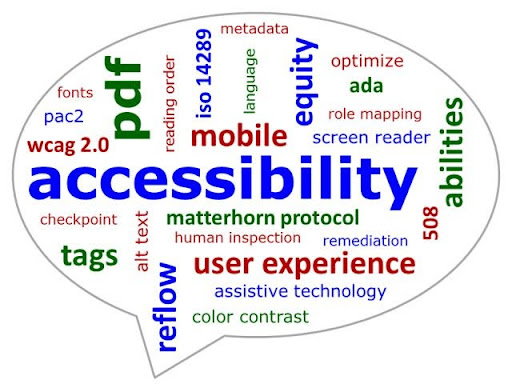
In today’s digital landscape, organizations face an increasingly complex web of expectations. Customers demand inclusive experiences. Regulators enforce stricter compliance standards. Teams work across diverse abilities and backgrounds. Yet many businesses still treat accessibility, equity, and compliance as separate initiatives—three competing boxes to check rather than what they truly are: interconnected drivers of business success.
The reality is compelling: when you design content with accessibility in mind, you’re not just checking legal boxes. You’re creating better experiences for everyone. When you build equity into your content strategy, you’re not just doing the right thing morally—you’re expanding your market reach and resonating with broader audiences. When you integrate compliance into your approach, you’re not fighting bureaucracy—you’re establishing competitive advantages and building trust.
This is the triple win.
Why These Three Matter
Accessibility means ensuring your digital content is usable by everyone—regardless of ability. This includes people with visual impairments, hearing loss, motor disabilities, cognitive differences, and temporary conditions (like a broken arm or a noisy environment). Accessible content is navigable, readable, and functional across all devices and assistive technologies.
Equity goes deeper. It’s about intentionally creating content that serves diverse audiences—considering language barriers, cultural contexts, socioeconomic factors, and historical inequities. Equitable content doesn’t just follow minimum standards; it actively reduces friction and welcomes everyone.
Compliance is the regulatory framework: WCAG guidelines, ADA requirements, Section 508, international standards, and emerging legislation that organizations must follow. Non-compliance carries legal and financial risks, but more importantly, it signals that an organization isn’t serious about serving its full audience.
Here’s where most organizations miss the mark: they see these as three separate problems. But they’re actually three dimensions of the same opportunity.
The Hidden Business Case
When teams treat accessibility, equity, and compliance as siloed concerns, they invest more, accomplish less, and create friction. Developers build features that compliance flags. Marketing creates campaigns that exclude segments of your audience. Customer service scrambles to handle complaints from people who can’t access your digital properties.
But when you integrate them from the start—when they inform your content strategy, design decisions, and product roadmap—something shifts. Your content becomes clearer and more persuasive for everyone. Your reach expands. Your risk profile shrinks. Your teams work more efficiently.
Consider real examples: Adding alt text to images isn’t just for screen reader users—it helps with SEO. Simplifying your language benefits people with English as a second language and improves conversion rates. Building keyboard navigation serves people with motor disabilities and power users who hate using mice. Designing with captions serves deaf audiences and people in noisy environments—which includes busy commuters, colleagues on video calls, and gym enthusiasts.
The businesses winning in this space understand something fundamental: accessibility, equity, and compliance are never trade-offs. They’re multipliers.
Where Most Organizations Get Stuck
The barriers are real but solvable:
Misconception #1: Accessibility is expensive and complex. In reality, it’s most cost-effective when built into strategy and design from day one. Retrofitting is expensive. Planning ahead is smart business.
Misconception #2: Compliance is enough. It’s not. Minimum compliance is just that—the minimum. Equity demands going further, understanding your specific audiences, and removing barriers that standards may not explicitly address.
Misconception #3: These initiatives pull resources from core business goals. The opposite is true. A content strategy that prioritizes accessibility and equity is a core business goal because it directly impacts customer experience, reach, retention, and brand trust.
Misconception #4: You need to be perfect. Perfection isn’t the goal—progress is. Start where you are, measure what matters, and improve continuously. Every barrier you remove serves real people.
Building Your Triple Win Strategy
Transforming how your organization approaches digital content doesn’t require a complete overhaul. It requires intentional alignment:
Assess your current state: Audit your digital properties. Where are accessibility gaps? Which audiences feel excluded? Where do you face compliance risks?
Align teams around shared outcomes: Bring together content, design, development, compliance, and customer-facing teams. When everyone understands the business case and their role, momentum builds.
Embed accessibility and equity into processes: Make it part of your design reviews, content guidelines, testing protocols, and success metrics. Don’t add it as an afterthought.
Learn from your audiences: People with disabilities and members of underrepresented communities are your best consultants. Involve them in testing and feedback loops.
Measure what matters: Track metrics that matter to your business—conversion rates, engagement, support tickets, reach across demographics—alongside compliance audits.
The Path Forward
Organizations that lead in digital experiences in 2025 and beyond won’t be the ones asking “What’s the minimum we need to do?” They’ll be the ones asking “How do we serve everyone better?” They’ll understand that accessibility, equity, and compliance aren’t competing priorities—they’re integrated expressions of customer-centricity and business intelligence.
The triple win isn’t a distant goal. It’s a strategic choice. It’s about recognizing that when you remove barriers for people with disabilities, you remove barriers for everyone. When you design for equity, you design for relevance. When you prioritize compliance, you protect and strengthen your brand.
At Makeni Bent Digital Consulting, we’ve seen the transformation firsthand. Organizations that embrace this integrated approach don’t just reduce risk: they unlock new opportunities, reach new audiences, and build deeper loyalty.
Your customers deserve it. Your business needs it. The market is moving there.
Ready to Build Your Triple Win?
If your organization is ready to transform your digital content strategy and align accessibility, equity, and compliance into a competitive advantage, we’re here to help.
Contact Us to discuss your content strategy, audit your current digital properties, or explore how we can support your journey toward truly inclusive digital experiences.
This is the first post in our ongoing series exploring the intersection of accessibility, equity, and compliance in digital content strategy. Stay tuned for deeper dives into specific implementations, emerging standards, and real-world case studies.
What’s your organization’s biggest challenge when it comes to accessible and equitable digital content? Share your thoughts in the comments below.